Court

The citation becomes a case. The clerk works it. The case closes through disposition.

Thin Line keeps the case together from intake through appearance, judgment, payment, and close-out. The clerk sees what happened, what is due, and what comes next.

Thin Line for courts is municipal and justice-court software for citation-based cases from intake through disposition.

The work

Built around the way your court works.

  • Intake & the docket

    Citations, complaints, defendants, violations, court dates, and the queue that starts the day.

  • Appearances & decisions

    Pleas, hearings, programs, compliance, judgments, and orders stay on the case.

  • Payments & accounting

    Receipts, plans, deposits, allocations, and close-out stay tied to the matter.

  • Warrants & reporting

    FTA, court-owned warrants, bonds, collections, and required Texas reporting from the same case.

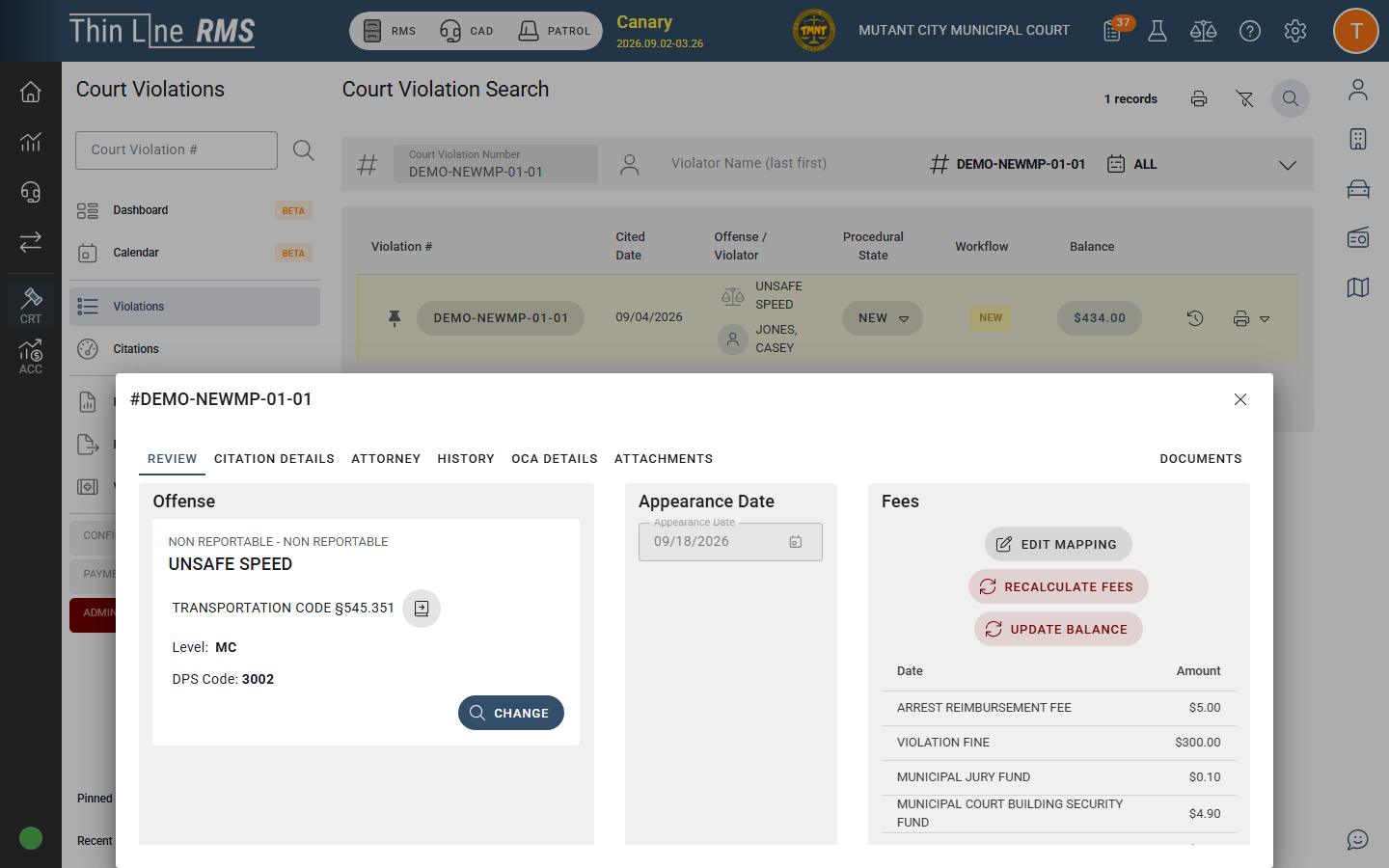
Thin Line court violation search with citation details and docket status

Explore the screenSelect a number to see how the work moves.

The clerk sees what happened, what is due, and what comes next.
  • 1. Case statusSee where the case stands and what action comes next.
  • 2. AppearanceThe next appearance stays on the case the clerk is working.
  • 3. FeesFines, costs, and the balance stay tied to the same matter.

How the work moves

How the work moves.

  1. 1The citation becomes a caseA citation can enter from law enforcement when RMS or Mobile Citations is connected, or the court can add it. The defendant, violation, docket, and first dates start here.
  2. 2The defendant respondsAppearances, pleas, programs, payments, and hearings continue on the same case.
  3. 3A decision becomes part of the case historyClerks and judges enter judgments, orders, fines, and costs. Warrants stay owned by the court that issued them.
  4. 4The case closesDisposition, accounting, and reporting finish from the same matter. Nobody rebuilds the ticket to close it.

Where we help

What changes when the case follows the work.

Clerks spend less time rebuilding the case

The defendant, charge, appearance, and payment stay on the matter instead of being entered again.

Judges see what happened before they decide

Pleas, programs, balances, warrants, and prior actions stay attached to the case.

Money stays on the matter

Receipts, plans, deposits, and close-out remain traceable to the originating case.

Compliance stays on the case

Deadlines, eligibility, documents, and dismissals stay with the matter instead of a side folder.

The story continues

The case doesn't end at the clerk's window.

  • Citation → Court

    The defendant, citation, and charge become the start of the court case when RMS or Mobile Citations is connected.

  • Court warrant → Law Enforcement

    A warrant issued by the court becomes work for the officers responsible for serving it. Ownership stays with the court.

  • Payment → Close-out

    Receipts, plans, deposits, and reporting stay tied to the case that produced them.

Each court keeps control of its own cases. The next agency gets what it needs to continue the story—not a disconnected starting point.

Products

The products behind the work.

  • Court ManagementThe court record for cases, appearances, decisions, payments, accounting, and reporting.
  • RMSThe law-enforcement record citations can enter from—and court-owned warrants can return to—when both are in use.
  • Mobile CitationsWrite it once in the field. The citation can become the court case when both products are connected.
  • PlatformShared people, charges, documents, permissions, and history across the products that use them.

Designed for Texas municipal and justice-court Class C / fine-only cases, including traffic and ordinance violations.

From the field

Customer stories related to this work.

Resources

Guides related to this work.

Evaluating the details?

See it with your operation in mind.

  • Tell us how your operation works today and where the friction is. We'll show you how Thin Line fits the work.
(806) 300-0455